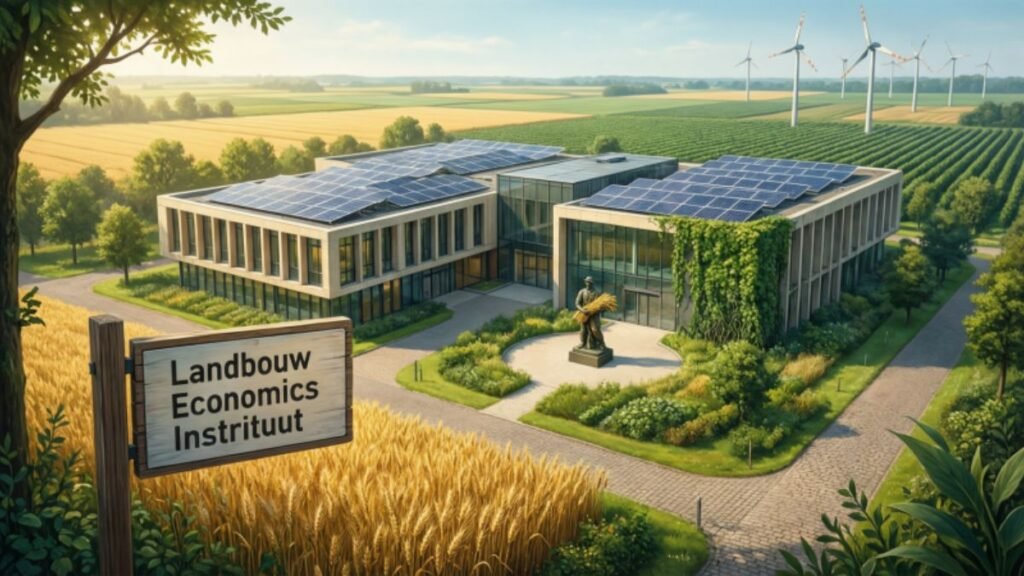
Modern agriculture no longer depends only on tradition, experience, or seasonal intuition. Today, farmers, policymakers, and agribusiness leaders rely heavily on research-driven insights to make confident decisions. In the Netherlands and across Europe, one organization has played a key role in shaping this knowledge-driven approach to farming and food systems. The landbouw economisch instituut has become a trusted name in agricultural economics, known for its deep analysis, reliable data, and practical recommendations. This article explores its purpose, influence, and long-term value in a world where food security, sustainability, and economic stability are closely connected.
Understanding the Role of Agricultural Economic Research
Agricultural economic research focuses on how farming systems interact with markets, resources, and society. It examines production costs, food prices, land use, and rural development to ensure agriculture remains profitable and sustainable. Institutions working in this field translate complex data into meaningful insights that farmers and governments can actually use.
The landbouw economisch instituut operates within this space by studying how economic forces affect agriculture at both micro and macro levels. Its research helps explain why certain crops thrive, how policies influence farmer income, and what trends may shape future food systems. By combining economics with agricultural science, it bridges the gap between theory and real-world farming challenges.
Historical Background and Institutional Evolution
The roots of structured agricultural economic research in the Netherlands go back several decades, shaped by post-war recovery and the need for efficient food production. Over time, research bodies evolved to address not just productivity, but also environmental impact, trade, and rural livelihoods.
The landbouw economisch instituut emerged as a response to these growing needs, developing a reputation for rigorous methodology and independent analysis. As agriculture became more globalized, the institute adapted its focus to include international trade, European Union policies, and sustainability metrics. This ability to evolve has kept its work relevant despite rapid changes in technology, climate conditions, and consumer behavior.
Supporting Farmers Through Data and Insight
Farmers face constant uncertainty, from fluctuating input prices to unpredictable weather patterns. Reliable data can mean the difference between profit and loss. Economic research institutions provide this clarity by analyzing farm income trends, production efficiency, and risk factors.
Through detailed farm-level studies, the landbouw economisch instituut offers insights that help farmers understand their cost structures and market positioning. Its research supports decision-making around crop selection, investment planning, and long-term farm viability. Rather than offering generic advice, the institute focuses on evidence-based findings that reflect real farming conditions.
Influence on Agricultural Policy and Decision-Making
Sound agricultural policy depends on accurate information. Governments must balance farmer welfare, consumer prices, environmental protection, and trade obligations. Without solid economic analysis, policies risk being ineffective or even harmful.
The landbouw economisch instituut plays a key advisory role by providing policymakers with neutral, data-driven assessments. Its studies help evaluate the economic impact of subsidies, environmental regulations, and market reforms. By presenting clear economic scenarios, the institute enables governments to design policies that are both fair and sustainable, strengthening trust between farmers and regulators.
Sustainability, Innovation, and the Future of Farming
Sustainability is no longer optional in agriculture. Issues such as climate change, soil degradation, and biodiversity loss demand long-term solutions. Economic research helps measure the true cost and benefit of sustainable practices, making it easier to adopt them at scale.
The landbouw economisch instituut contributes by analyzing how sustainable innovations affect farm income and productivity. It evaluates new technologies, renewable energy use, and climate-smart farming methods from an economic perspective. By showing that sustainability and profitability can align, the institute supports a future where agriculture remains resilient and responsible.
Global Relevance and Knowledge Sharing
Although rooted in the Netherlands, the influence of agricultural economic research extends far beyond national borders. Global food systems are interconnected, and challenges such as food security and climate resilience require shared knowledge.
The landbouw economisch instituut collaborates with international organizations, universities, and research networks. Its findings contribute to global discussions on agricultural trade, rural development, and sustainable food systems. This international engagement ensures that local research informs global solutions, while global trends are reflected in national strategies.
Conclusion
Agriculture today operates at the intersection of economics, environment, and society. Reliable research is essential for navigating this complexity. The landbouw economisch instituut stands out as a pillar of agricultural economic knowledge, offering clarity in an uncertain world. Through its data-driven insights, policy support, and commitment to sustainability, it continues to shape smarter decisions for farmers and policymakers alike. As global challenges grow more complex, the value of independent, high-quality agricultural research will only increase.
FAQs
What is the main purpose of the Landbouw Economisch Instituut?
Its primary purpose is to provide economic research and analysis that supports informed decision-making in agriculture and food systems.
Who benefits most from its research?
Farmers, policymakers, agribusinesses, and researchers all benefit from its data-driven insights and economic evaluations.
Does it focus only on Dutch agriculture?
While its core focus is the Netherlands, its research often addresses European and global agricultural issues.
How does it support sustainable farming?
It evaluates the economic impact of sustainable practices, helping farmers adopt environmentally friendly methods without sacrificing income.
Why is agricultural economic research important today?
It helps manage risks, improve efficiency, and design policies that balance profitability with environmental and social responsibility.